A clear, beginner-friendly guide comparing spinning, baitcaster, and spincast combos — learning curve, casting ability, accuracy, and best uses — to help new anglers choose the perfect first setup.
This question — spinning vs. baitcaster vs. spincast — is the gear comparison beginners ask most often, and it has a clear, honest answer that this guide gives you without hedging. Different reel types genuinely suit different skill levels, different target species, and different fishing scenarios. Getting the wrong one for your situation doesn’t just waste money; it makes your first season harder than it needs to be. The right one lets you spend your time actually fishing instead of untangling line.
We’ll cover exactly how each reel type works, what makes each one easier or harder for beginners to learn, which lure types each handles well, and — most importantly — which one you should buy first based on your situation. By the end, the gear wall won’t feel nearly as confusing.
How Each Reel Type Works — The Plain-English Version
Before comparing them, it helps to understand what each reel is actually doing when you cast. The mechanics determine the learning curve, the backlash risk, and what each reel handles best:
Spincast Reel (Push-Button) — The Enclosed-Face Reel on Top of the Rod | Best for Young Children & Absolute Beginners
What it looks like: The reel sits on top of the rod. It has an enclosed nose cone covering the spool, with a push button on the back. The line comes out through a small hole in the front.
How it works: Push the button before casting to engage the line. Cast. Release the button when the rod is pointed at the target. The line releases automatically. That’s it. There’s no bail to open, no index finger to train, no coil release to time.
Why young beginners love it: The push-button mechanism reduces the cast to two steps: push and release. A 6-year-old can learn to get a lure in the water in under 5 minutes. The enclosed spool means no tangles from wind knots or accidental bail openings. It is genuinely the simplest fishing reel ever designed.
What it handles well: Light lures and terminal tackle (1/16 oz to 3/8 oz), panfish, small trout, small perch. Adequate for most beginner pond and lake fishing scenarios.
Limitations: Less line capacity than spinning. Shorter maximum casting distance. Less suitable for heavier lures or larger fish. The enclosed design also makes the drag system less smooth than a quality spinning reel — fine for small fish, occasionally inadequate for a spirited larger fish.
Brands: Zebco 33, Zebco Splash Youth, Shakespeare Synergy. The Zebco 33 is the most iconic spincast reel in the U.S. and has been catching panfish for beginner anglers for decades.
Spinning Reel — The Open-Face Reel That Hangs Below the Rod | Recommended for Most Beginners
What it looks like: The reel hangs below the rod. It has an open face with a metal arm (the bail) that controls the line. The spool is fixed — it doesn’t rotate when you cast.
How it works: Open the bail, hook the line with your index finger, cast, release the finger at the right moment. The line peels off the fixed spool in coils as the lure flies forward. Close the bail by turning the handle once. Simple.
Why beginners love it: No backlash. Because the spool doesn’t rotate during the cast, there’s no way to overrun the line and create a tangle. The worst that happens with a bad cast is the lure doesn’t go far. The reel itself doesn’t explode into a bird’s nest of monofilament.
What it handles well: Light to medium lures (1/32 oz to 3/4 oz), all common freshwater species, panfish, trout, bass, crappie, walleye, and with a heavier setup, catfish and carp. The spinning reel is the most versatile beginner option across all freshwater scenarios.
What it doesn’t do as well: Spinning reels are slightly less accurate than baitcasters for experienced anglers, and they handle very heavy lures less efficiently than baitcasting reels. For beginners, neither of these limitations matters in the slightest.
Brands: Shakespeare Ugly Stik GX2, Zebco Splash Spinning, Abu Garcia Max X, Pflueger Trion. All available from $20-$75 as combos at major retailers.
Baitcasting Reel — The Top-Mount Reel With a Rotating Spool | Season 2+ — Not for First-Season Beginners
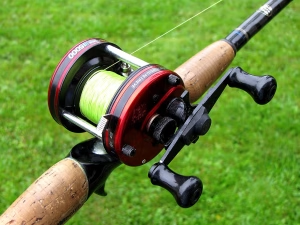
What it looks like: The reel sits on top of the rod (trigger grip handle). Unlike the spincast’s enclosed spool, the baitcaster’s spool is visible and rotates during the cast. You hold the rod with a pistol grip.
How it works: The spool rotates as the lure flies forward. You control the spool speed with your thumb on the spool face during the cast to prevent the spool from outrunning the lure (which creates backlash). Get it right and the cast is precise. Get it wrong and you’re untangling a ‘professional overrun’ — the polite term for the bird’s nest of doom.
Why experienced anglers use it: When mastered, a baitcaster is more accurate than a spinning reel at short to medium distances, handles heavier lures and lines better, and provides the feel and control that makes precise lure placement possible around specific targets (a dock piling, a gap in the weeds).
The learning curve is real: Most new baitcaster users experience multiple backlash tangles in their first sessions. Learning to control thumb pressure during the cast requires deliberate practice over 2-4 weeks before it becomes reliable. A first-season angler learning on a baitcaster spends significantly more time untangling and significantly less time fishing.
When to buy one: After you’ve fished a full season on a spinning reel and decided you want to fish bass specifically with heavier lures and more precise presentation. Not before.
Brands: Abu Garcia Black Max, Zebco Quantum Smoke Jr., Ugly Stik Tiger Baitcast. Entry-level baitcasters start around $40-$60 for a combo. Quality baitcasters that perform reliably start around $50-$80 for the reel alone.
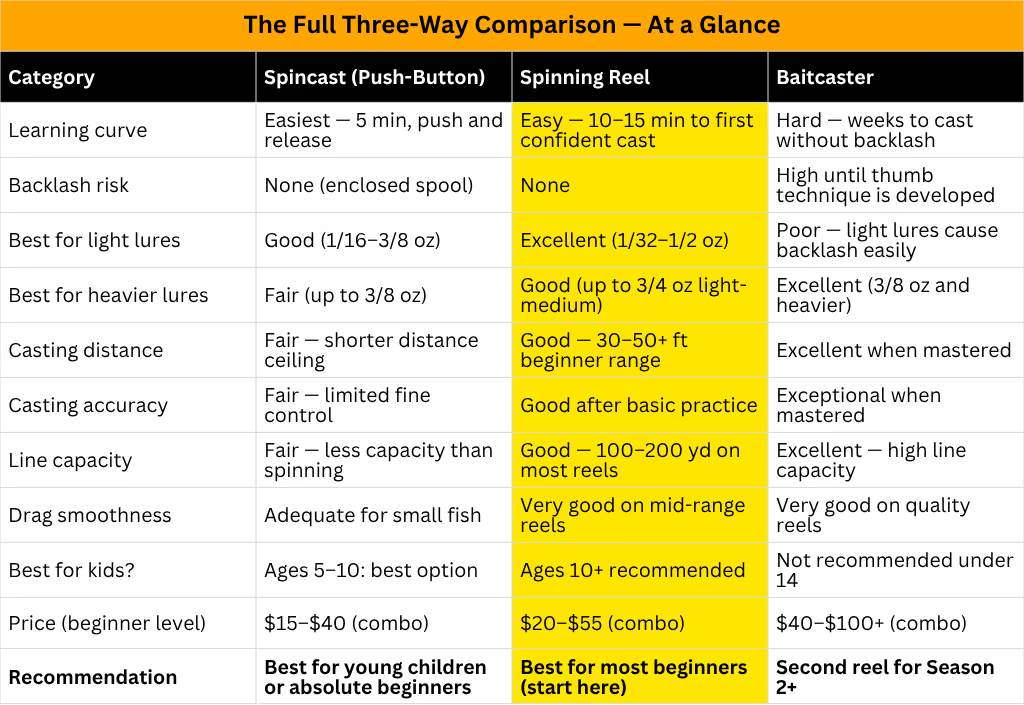
Okay, But Which One Should YOU Actually Buy?
The comparison table above is useful, but sometimes you just need someone to tell you what to get. Here it is:
adult or teenager buying your first fishing combo
✅ SPINNING REEL. Full stop. A 6-6.5 ft ultralight or light spinning combo in the $25-$65 range is your answer.
Why: Easy to learn, catches everything in freshwater, widely available, no backlash, versatile for every beginner scenario.
child 5–10 years old or ABSOLUTE beginner
✅ SPINCAST (PUSH-BUTTON). A 4.5-5.5 ft youth, 5.5-7.0 ft adult, spincast combo from Zebco in the $20-$50 range.
Why: Simplest possible operation, no bail management, minimal casting failures, maximizes a focus on fishing success and enjoyment.
child 10–12 years old
✅ SPINNING REEL (youth sized). A 5.5-6 ft youth spinning combo in the $20-$35 range.
Why: Old enough to manage a bail, benefits from the versatility and smooth drag of spinning for growing skill level.
mastered the spinning reel
If you already fished a full season on a spinning reel and want more precision for bass fishing:
✅ BAITCASTER. An entry-level Abu Garcia or Ugly Stik baitcast combo to add as a second rod.
Why: You now know where you cast, what you target, and how much time you want to invest in technique. The baitcaster is worth learning.
The Baitcaster Backlash Problem — Why It Matters More Than You Think
The most important thing to understand about baitcasting reels for beginners isn’t that backlash happens — it’s what backlash does to the experience. When you create a significant backlash (the spool overruns the lure and the line piles on itself in a tangled mass), you stop fishing. You sit there for 5-15 minutes working the tangle out, or you cut it loose and lose most of your terminal tackle. On a day with kids, this is usually when someone announces they’re bored.
Modern baitcasters have magnetic and centrifugal braking systems specifically designed to reduce backlash for newer users — and they genuinely help. But they don’t eliminate it. They reduce a catastrophic backlash to a minor one. The thumb still has to learn, and it learns through repetition, which means initial sessions on a baitcaster involve more learning and less fishing.
The honest math: A beginner on a spinning reel catches their first fish within their first 30 minutes of honest effort on a stocked pond with a worm. A beginner on a baitcaster may spend their first 30 minutes untangling two backlashes. Both are learning, but only one is having the experience they came for. Save the baitcaster for when you already love fishing.
What ‘Backlash’ Actually Is (And Why Spinning Reels Don’t Have It)
Backlash happens because a baitcaster’s spool rotates to release line during a cast. If the spool spins faster than the lure is moving, it dumps line faster than the lure can pull it forward. The excess line piles up on the spool in a tangle.
Spinning reels have a fixed (non-rotating) spool. Line peels off in coils from the fixed spool as the lure pulls it forward. The spool can’t outrun the lure because it doesn’t spin. No rotation means no overrun means no backlash.
Spincast reels have an enclosed spool that releases line through a small hole. The enclosed design prevents line from piling up even if tension is lost. It’s physically impossible to backlash a spincast reel in the traditional sense.
This is why beginners default to spinning and spincast: the mechanics of both prevent the failure mode that makes baitcasting genuinely difficult to learn.
Getting Your First Setup on the Water — Practical Notes
For spincast combo
- Press the button all the way down before swinging back for the cast. Don’t release it until the rod is pointed at your target.
- The drag on a spincast reel is usually a star-shaped wheel behind the push button. Tighten to resist larger fish; loosen if line won’t release properly.
- Line tangles inside the nose cone on cheaper spincast reels if the line is too light for the reel. If the line bird’s nests inside the cone (different from baitcaster backlash — this is an internal tangle), try slightly heavier monofilament (8 lb instead of 6 lb).
For Spinning Combo
- The bail: This is the metal wire arm on the reel. Flip it open before casting, close it by turning the reel handle once after the lure lands. If it won’t open, you have the anti-reverse engaged — there’s a small switch on the reel body.
- The drag: The front knob on a spinning reel (or the star wheel on a baitcaster) controls how much line releases under pressure. For beginners, set the drag so you can pull line off with moderate hand pressure — not so tight the line breaks on a fish, not so loose it gives line on every cast.
- Line management: After casting, a loose loop of line sometimes stays in front of the bail. Reel it in before setting the hook or your hookset goes into the loop rather than the fish.
- Casting accuracy: The lure goes where the rod tip is pointing at the moment you release the line. Point at the target. Release when the rod tip is facing the target. It clicks quickly.
The Three Biggest Beginner Reel Mistakes
- Buying a baitcaster as a first reel because it looks like what serious anglers use. Serious anglers use baitcasters because they spent seasons on spinning reels first. The baitcaster is a second reel, not a first reel. This is the fishing version of wanting to skip learning to drive a manual car before buying a Formula One car.
- Choosing a spincast reel as an adult because it’s ‘simpler.’ The simplicity that makes spincast ideal for young children comes with real limitations: less casting distance, less drag smoothness, less line capacity. An adult beginner who starts on spinning will be grateful within the first session that they chose the more capable option.
- Setting the drag too tight. A drag set so tight no line releases under pressure means when a fish runs hard, the line breaks instead of running out. For beginners, set the drag so you can pull line from the spool with moderate resistance. A fish should be able to take line against resistance, not snap it instantly.
The Right Reel Puts You in the Water — Not in the Parking Lot Untangling Line
The spinning vs. baitcaster vs. spincast question has a real answer, and it’s not “it depends” — it’s “spinning for most beginners, spincast for young children, baitcaster after you’ve got a season under your belt.” This isn’t a personal preference; it’s the logical match between the mechanics of each reel and the experience level required to use them effectively. A spinning reel’s fixed spool and open-bail design gives beginners immediate casting capability, broad species coverage, and zero backlash. That combination makes the first season of fishing what it should be: time spent fishing.
Open bail. Cast. Close bail. Fish. That’s all it is.