A complete spring crappie guide covering pre-spawn staging, water-temperature triggers, shallow-water movement, and the best baits and techniques for every phase of the spring bite.
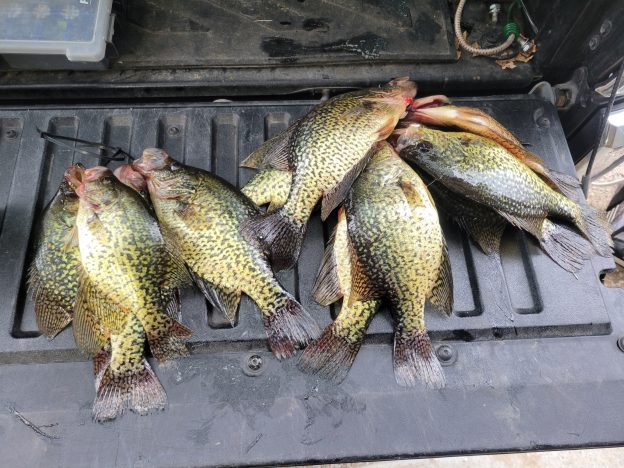
Spring Crappie Fishing: The Complete Pre-Spawn to Spawn Guide
The Beginner’s Guide to Crappie Fishing on Other90Fishing.com introduces the species — black and white crappie behavior, habitat preferences, basic jig and bobber technique, and the gear foundation you need to get started. Spring is where that foundation gets applied in the most productive crappie fishing of the entire year. From Southern reservoirs in February to Midwest natural lakes in May to the Great Lakes region and beyond through June, spring represents a window where crappie concentrate in predictable, accessible areas and feed aggressively enough to provide some of the fastest action in freshwater fishing.
But spring crappie fishing is not the same experience from February through June. It’s a progression — a series of distinct phases driven almost entirely by water temperature — and each phase calls for different locations, different depths, and different presentations. The angler who fishes the same shallow dock every March trip is sometimes rewarded and sometimes completely stumped, often because the water temperature shifted 6°F between visits and the fish moved from staging areas into active pre-spawn territory, or pulled back from a cold front that interrupted a warming trend.
This guide teaches that progression in full. We’ll cover the temperature-driven behavioral changes from early pre-spawn through peak spawning activity, how to identify staging areas and transitional cover at each phase, the best baits and presentations specifically matched to each temperature window, and how to read water conditions that signal where fish are right now — not where they were last week. Whether you’re fishing a Southern reservoir in March, a Midwest natural lake in April, or a cold-weather reservoir during the ice-out window, this guide gives you the seasonal framework to catch crappie consistently through the most productive crappie season of the year.
Temperature Drives Everything — Understanding the Spring Crappie Calendar
Crappie are among the most temperature-responsive freshwater fish. Their spring movement isn’t driven by calendar dates — it’s driven by water temperature with remarkable consistency across different lakes, different regions, and different years. An angler who understands the degree-by-degree temperature triggers for crappie movement can predict fish location with better accuracy from a thermometer reading than from months of past fishing history on the same water.
The fundamental spring crappie pattern: fish move from winter deep-water holding areas toward shallow spawning areas as water temperature rises, staging at transitional depth and cover points along the way, and spawning in shallow water when temperatures stabilize in the 62-68°F range. After spawning, they gradually pull back to slightly deeper post-spawn holding areas. The entire cycle from first movement to post-spawn typically spans 6-10 weeks depending on how consistently temperatures rise.
The Degree-by-Degree Spring Movement Chart
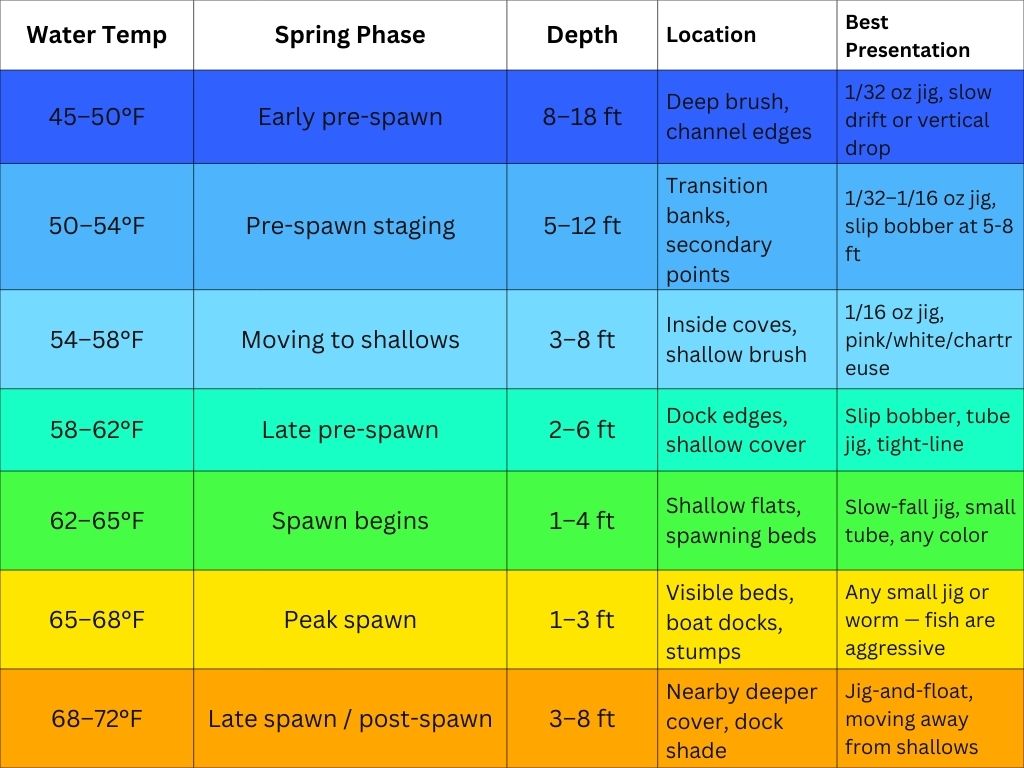
Why Cold Fronts Matter More in Spring Than Any Other Season
Cold fronts are the single most disruptive event in spring crappie fishing — and they’re far more disruptive during the pre-spawn phase than at any other time of year. When a cold front drops water temperature 5-8°F after a warming trend that had fish moving shallower, those fish don’t just slow down. They retreat. Fish that were staging at 5-8 feet may pull back to 12-15 feet within 24-48 hours of a cold front passage.
The post-cold-front adjustment: Return to slightly deeper versions of whatever structure you were fishing before the front. If fish were on dock pilings at 5 feet, look for them at the end of the dock in 8-10 feet. If they were on shallow brush, look for them at the base of the brush pile in deeper water. The fish are still associated with the same structure — they’ve just moved to the deeper edge of it. Give it 24-48 hours of stable or warming conditions before the fish make their way shallow again.
Spring Crappie Regional Timing Calendar
The same temperature triggers fire at different calendar times across the U.S. Here’s when pre-spawn to spawn typically occurs by region:
Gulf Coast / Deep South (AL, MS, LA, TX Gulf): February–March. Water temperatures reach spawn range earliest.
Mid-South / Tennessee Valley (TN, AR, KY, NC): March–April. Pre-spawn staging often begins in mid-February.
Midwest / Ohio Valley (OH, IN, IL, MO, KS): April–May. Ice-out precedes pre-spawn by 2-4 weeks on many lakes.
Upper Midwest / Great Lakes (MN, WI, MI, NY): Late April–June. Ice-out may be as late as April on northern lakes.
Plains States (OK, KS, NE, SD): April–May. Variable year-to-year based on late cold snaps.
Western Reservoirs (CA, AZ, NM): February–April on lower-elevation impoundments; May–June at higher elevations.
Tip: Always use a simple clip-on stream thermometer ($8-$15) rather than calendar dates. Water temperature is more reliable than any date-based expectation.
Where to Find Spring Crappie — Phase by Phase
Location is the defining variable in spring crappie fishing, and it shifts with temperature in a pattern that becomes predictable once you understand the structure of the lake or reservoir you’re fishing. Here’s how to identify productive spring crappie locations at each phase:
Early Pre-Spawn (45–52°F)
Deep Staging — Finding Fish Before They Move
Where they are: Crappie at this temperature phase arein winter holdover locations or beginning to stage at transitional depth zones along channel edges, underwater points, and brush piles in 8-20 feet of water. They’represent in the lake’s deeper structure but beginning to sense the warming trend.
What structures to target: Deep brush piles identified during low-water periods (see the How to Read Brush Piles for Crappie article), underwater channel edges where depth changes from 15-20 ft to 8-12 ft, secondary points where creek channels meet the main lake basin, and the deepest end of any dock that extends into significant water depth.
Behavior at this phase: Fish are loosely grouped, not yet in tight pre-spawn schools. Feeding activity is present but not the aggressive school-feeding behavior you see in late pre-spawn and spawn.Expect scattered fish with longer intervals between bites.
Technique focus: Vertical jigging with 1/32 ozjigs in natural colors (white, chartreuse, light pink) directly over the structure, using electronics to identifydepth of fish before presenting. Slow drop and minimal action. See the Electronics Basics for Crappie Fishing article for how to use a depth finder to identify fish at this phase.
Bank fishing access: Limited during this phase — fish are typically too deep for effective bank presentation without a long cast or dock access to deep water. Focus bank fishing energy onthe next phase.
Pre-Spawn Staging (52–60°F)
Transition Banks and Secondary Cover — The Most Productive Early Spring Window
Where they are: The most strategically important spring crappie phase for most anglers. As temperatures push into the low-to-mid 50s, crappiebegin a deliberate migration toward spawning areas, staging on transitional structure that sits between their winter holding areas and the shallow spawning flats. This transition can take 2-4 weeks depending on weather stability.
Staging structure: Inside turns of creeks and coves where bottom depth transitions from 8-12 ft to 4-6 ft, brush piles on secondary points leading into spawning bays, flooded timber at the 6-10 ft depth range, and dock structures adjacent to shallow flats. Fish are holding at the intersection of depth and cover.
Why this phase produces the biggest fish: Pre-spawn crappie — particularly females loaded with eggs — are at their maximum weight of the year. The fish at 52-58°F staging areas are often significantly heavier than the same fish caught during the spawn in shallow water.
Technique: Slip bobber set at 5-8 ft with a 1/16 ozjig in pink, white, or chartreuse. Cast to the up-current or up-breeze side of brush piles and transition points and let the bobber drift into the target zone naturally. Also effective: tight-line jigging at the identified depth using a slow, quarter-inch hop-and-fall presentation.
Bank fishing opportunity: Many staging areas are accessible from the bank on public lake shores and park areas. Target bank sections adjacent tothe mouth of small coves and creek arms — the transitional bottom from 6-10 ft is often castable from the bank where the lake narrows.
Late Pre-Spawn (58–64°F)
Inside Coves and Shallow Cover — Fish are Within Reach
Where they are: As temperatures push above 58°F, crappiebegin moving aggressively into the shallow coves, backwater bays, and the primary cover they’lluse for spawning. Fish that were at 8-12 ft two weeks ago are now holding at 3-6 ft. Dock fishing and bank fishing become increasingly productive as fish move within easy casting range.
Primary cover at this phase: Boat docks and dock pilings (especially those with deep shade and shallow cover), submerged brush in 3-5 ft, flooded vegetation at the waterline, standing timber in backwater areas, and any artificial structure (crappie attractors, brush piles) placed at 4-6 ft depth.
The dockpiling pattern: Dock pilings provide the ideal combination of vertical structure and shade that pre-spawn crappie seek. Fish often stack at specific pilings based on shade angle and depth profile. The shaded, deep-end pilings of longer docks that extend into 4-8 ft of water are typically the most productive.
Bait shift: At this temperature, crappie becomemore responsive to a wider range of presentations. 1/16 ozjigs in pink, white, and chartreuse produce well under a slip bobber. Live minnows become increasingly effective as fish push into shallower, warmer water. Small tube jigs and curly-tail grubs in natural shad colors also work well.
Family and beginner note: The late pre-spawn phase is among the most accessible crappie fishing experiences for beginners. Fish are in 3-6 ft of water near easily identifiedstructure (docks, visible brush), respond to a simple slip bobber and jig rig, and feed actively enough to produce steady action throughout a fishing session.
Spawn (64–68°F)
Shallow Beds and Maximum Accessibility — Spring Fishing at Its Best
Where they are: Spawning crappie move to the shallowest cover available — typically 1-4 feet of water near any available hard structure or vegetation. In clear-water lakes, spawning beds on sandy or gravel bottom are sometimes visible from the surface, with fish hovering over them. In darker or more turbid water, fish locate by structure association rather than visible beds.
Spawn timing: Both male and female crappie participate in spawning. Males move shallower first and begin fanning beds; females follow. During peak spawn, fish are concentrated, aggressive, and relatively easy to catch — this is when numbers-focused anglers target crappie most heavily.
Primary spawn structure: Stumps and fallen timber in 1-3 ft of water, dock pilings in the shallowest sections, flooded willows and emergent vegetation, rock rip-rap in 1-2 ft, any hard-bottom area near a food source.
Technique: This is the phase where almost any correct-sized presentation catches fish. A 1/16 ozjig under a slip bobber at 1.5-2.5 ft, a small tube jig on a tight line, or a small jig cast under docks all produceduring peak spawn. Pink and white remain the most consistent colors, but yellow, chartreuse, and even natural shad patterns work well in warm, clear water.
Ethics note: In heavily pressured waters, it’s worth practicing catch-and-release during peak spawn, especially for females. The spawning period is when crappie populations are most vulnerable to harvest pressure, and returning fish quickly after a photo helps maintain population health for future seasons.
Post-Spawn (68–72°F+)
Recovery and Transition — A Short but Productive Window
Where they are: After spawning, crappie gradually pull away from the shallowest cover and begin moving to the slightly deeper structure adjacent tospawning areas — dock ends, deeper brush piles, and the edges of the coves they spawned in. Post-spawn fish aren’t immediatelyaggressive feeders, but as they recover metabolically over 1-2 weeks, they begin feeding heavily again.
Post-spawn feeding recovery: Females recover from spawning first (they were less energy-depleted than males, who guarded the beds) and begin feeding in the 4-8 ft depth range near their spawning locations within days of finishing. Males guard fry for 1-2 weeks before abandoning the shallows.
Summer transition: Post-spawn crappiegradually movetoward their summer patterns — deeper brush piles, suspended water columns over structure, and shaded dock interiors. This transition typically takes 2-4 weeks after spawncompletion.
Technique: A jig under a slip bobber at 4-6 ft works well for recovering post-spawn fish near the edges of coves and dock complexes. Patience is required— post-spawn action is slower than peak spawn but often produces larger fish than the smaller males that dominated spawn-phase catches.
Cross-reference: See the Bank Fishing for Crappie and Midwest Crappie Patterns articles on Other90Fishing.com for summer transition location guidance.
The Best Spring Crappie Presentations — Phase by Phase
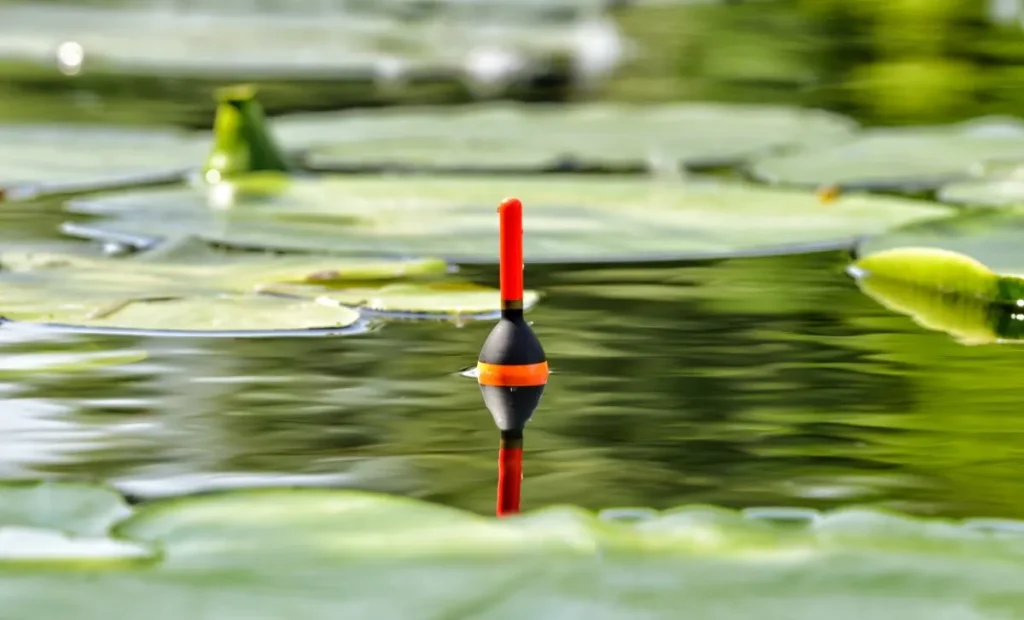
The Slip Bobber: The Most Versatile Spring Tool
The slip bobber rig is the single most versatile spring crappie presentation across all phases from pre-spawn to post-spawn. It solves the core spring challenge: crappie occupy specific depths that change dramatically over the course of weeks, and a slip bobber allows you to adjust that depth precisely and repeatedly without re-rigging. Setting a stop to fish at 3 feet one morning and 7 feet the next afternoon takes 10 seconds with a slip bobber and would require a complete re-rig with a fixed bobber.
Spring slip bobber setup: small barrel swivel (acts as bobber stop for cheap rigs or pair with a bobber stop bead kit), 12-18 inch fluorocarbon leader, 1/32-1/16 oz jig hook or small Aberdeen hook for live minnow. The bobber stop slides to your target depth. A 5-6 ft ultralight rod with 4-6 lb monofilament or fluorocarbon is the standard spring setup.
Bank fishing with a slip bobber: A 5-6 ft ultralight can cast a slip bobber rig 30-40 feet from a bank — far enough to reach dock pilings, outer brush pile edges, and the transition zone from bank-adjacent shallows to deeper flats. See the Bank Fishing for Crappie article on Other90Fishing.com for specific bank location selection.
Tight-Line Jigging for Pre-Spawn Staging Fish
For the pre-spawn staging phase (52-58°F) when fish are on deep brush piles, underwater points, and channel edge structure, a tight-line jigging approach often outperforms the slip bobber. Lower a 1/32 oz jig directly to the identified depth (marked by your depth finder or by counting seconds on the fall), then work it with quarter-inch lifts and 3-5 second pauses. The minimal-action vertical presentation is specifically effective on cold-water crappie that won’t chase a moving bait.
Jig weight selection by temperature: 1/32 oz is the standard for cold water (below 55°F) because the slower fall gives lethargic fish more time to commit. 1/16 oz becomes the versatile choice as temperatures push above 55°F and fish become more active. Heavier jigs (1/8 oz) are rarely needed in shallow spring crappie fishing but become useful for reaching deep staging areas quickly when structure is at 15-20 ft.
Live Minnows: The High-Percentage Spring Option
As water temperature rises above 58°F and crappie enter the late pre-spawn and spawn phases, live minnows become one of the highest-catch-rate presentations available. A 2-inch shiner or crappie minnow on a small Aberdeen hook (size 4-6) under a slip bobber set at the appropriate depth produces strikes from crappie that have become selective about artificial presentations in clear, shallow, heavily-pressured water.
Minnow presentation: Hook the minnow through the back behind the dorsal fin — this keeps it alive and active for maximum attraction time. Set the bobber depth to suspend the minnow 12-18 inches off bottom, or 6-12 inches below the bottom of a dock. Minnows under a bobber near dock pilings during the spawn phase is one of the oldest and most consistent spring crappie presentations in the country.
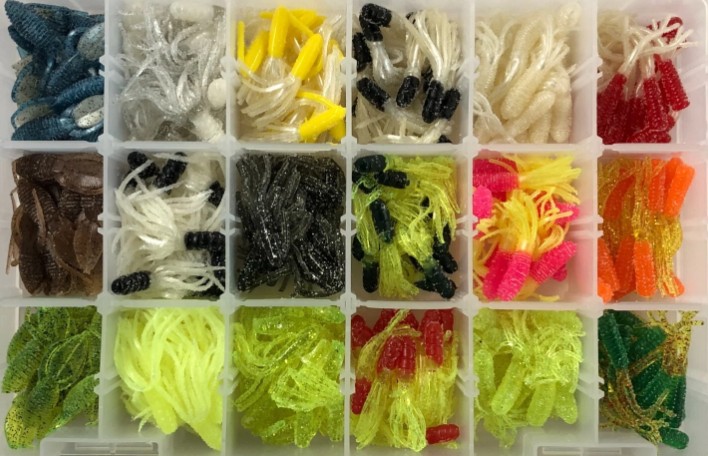
Spring Jig Colors: A Practical Selection Guide
Jig color in spring crappie fishing is influenced by water clarity, light conditions, and fish aggressiveness — all of which change through the spring season:
•Pink and white: The most universally effective spring crappie colors across all phases and most water clarity conditions. Pink has a particular reputation for generating strikes in the pre-spawn phase across Southern and Midwest reservoirs, with decades of angler consensus behind it.
•Chartreuse: Excellent in slightly stained water or low-light morning conditions. Works well in the post-frontal period when fish have moved slightly deeper. Chartreuse tail with white body is a reliable combination.
•Natural shad patterns (silver/grey, pearl): Most effective in clear water during and after the spawn when fish are in shallow, bright conditions. Natural colors in gin-clear water outperform bright attractor colors on pressured fish.
•Yellow and orange: Good search colors in stained water and during the earliest pre-spawn phase when fish are in deeper, darker water. Yellow and orange jig heads with white or chartreuse bodies are worth having in the box.
•Practical rule: Start with pink or white in the morning and clear water. Switch to chartreuse in low light or after a cold front. Use natural shad patterns in gin-clear post-spawn shallow water.
|
Slip Bobber Jigging |
Tight-Line Vertical Jigging |
|
Best phase: Late pre-spawn through spawn (56–68°F) |
Best phase: Early pre-spawn staging (45–56°F) |
|
Best depth: 1.5–8 ft (adjustable) |
Best depth: 5–20 ft (precise depth control) |
|
Best cover: Dock pilings, shallow brush, visible structure |
Best cover: Deep brush piles, channel edges, points |
|
Presentation: Slow drift or stationary hold |
Presentation: Minimal lift-pause over structure |
|
Best from bank: Yes — excellent castable approach |
Best from bank: Dock access to deep water required |
|
Jig weight: 1/32–1/16 oz |
Jig weight: 1/32–1/16 oz (match to depth) |
Spring Crappie Gear — What You Actually Need
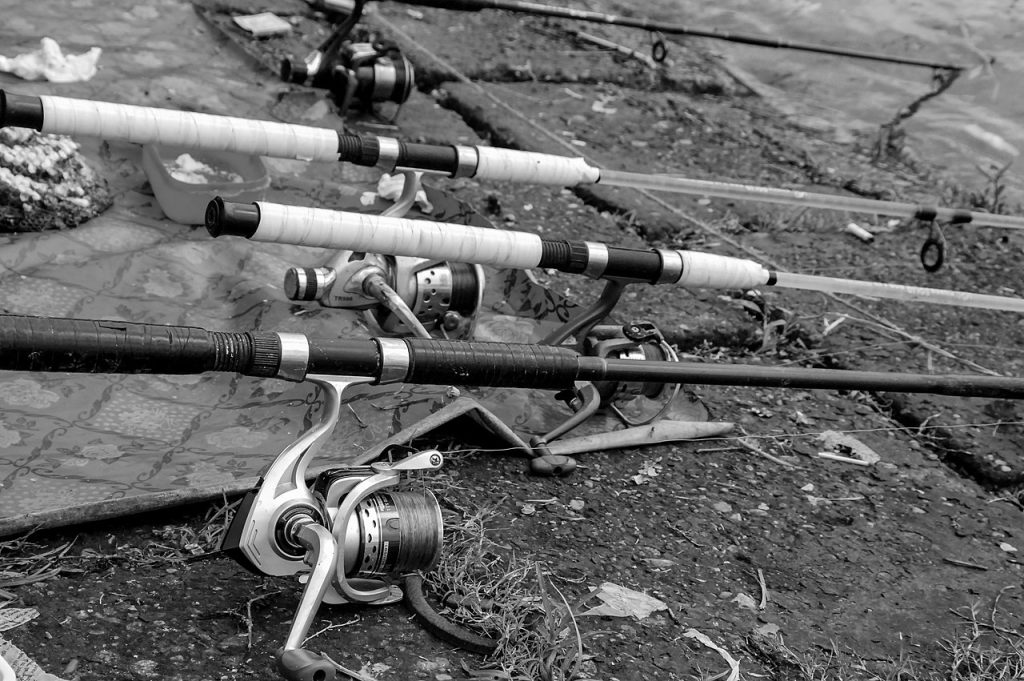
The Rod and Reel: Sensitivity for Light Spring Bites
Spring crappie bites — particularly during the cold early pre-spawn phase — are subtle. A sensitive fast-tip ultralight (5.5-7 ft, rated for 2-6 lb line) transmits those bites clearly; a soft medium-action rod absorbs them. The fast-tip ultralight is the foundation of effective spring crappie fishing, and it doesn’t require a large investment: quality ultralight spinning combos from Ugly Stik or Shakespeare in the $30-$55 range handle all spring crappie scenarios effectively.
For longer docks and wider lakes where casting distance matters: a 7-foot ultralight provides noticeably better range on a slip bobber cast. The extra length also helps with line mending when fishing under docks from bank or boat.
Line: Why 4-6 lb Fluorocarbon Matters in Spring
Spring crappie fishing in clear, low-water conditions requires attention to line visibility in a way that summer stained-water fishing doesn’t. A 4-6 lb fluorocarbon mainline (or a 12-18 inch fluorocarbon leader attached to 6 lb monofilament via a small barrel swivel) is worth the investment during the clear-water pre-spawn and spawn phases when fish in shallow water have plenty of time to inspect your rig.
Monofilament performs equivalently in the stained, post-frontal conditions that sometimes characterize early pre-spawn water, and it’s a perfectly adequate choice for beginners or family fishing at public stocked ponds and moderately clear lakes. The fluorocarbon upgrade matters most on natural lakes and clear reservoirs where water visibility exceeds 3-4 feet.
Complete Spring Crappie Setup — Phase-Appropriate Rigging
EARLY PRE-SPAWN SETUP (45–52°F)
• Rod: 5.5–6.5 ft ultralight fast action
• Line: 4-6 lbfluorocarbon or mono
• Rig: Tight-line — 1/32 ozjig, no bobber, measured drop to structure depth
• Jig color: White, light pink, or chartreuse
• Electronics: Depth finder to identifybrush at 10-18 ft
PRE-SPAWN STAGING SETUP (52–60°F)
• Rod: 6–7 ft ultralight fast action
• Line: 4-6 lbfluorocarbon main + leader
• Rig: Slip bobber set at 5-8 ft, 1/16 ozjig on 12–18″ leader
• Jig color: Pink, white, chartreuse
• Cast to: Transition banks, outer brush pile edges, creek-channel brush
SPAWN & LATE PRE-SPAWN SETUP (60–68°F)
• Rod: 5.5–7 ft ultralight fast action
• Line: 4-6 lbmono or fluorocarbon
• Rig: Slip bobber at 2-4 ft or tight-lineunder dock pilings
• Jig color: Pink, white, or natural shad in clear water
• Alternative: Live minnow on #4-6 Aberdeen hook under slip bobber at 2-3 ft .
POST-SPAWN SETUP (68–72°F)
• Rod: 6–7 ft ultralight fast action
• Line: 4-6 lb mono or fluorocarbon
• Rig: Slip bobber at 4-6 ft near dock edges and outer cove structure
• Jig color: White, chartreuse, or natural shad
Spring Crappie Fishing: Step-by-Step Game Plan
BEFORE YOU GO
• Check water temperature. Pull current readings from lake buoys, USGS water gauges for rivers, or your own thermometer at the water’s edge. Match your target location to the temperature phase in the chart above.
• Check recent weather. A warming trend over 3+ days signals fish moving shallower. A recent cold front signals pullback to slightly deeper versions of the same structure.
• Identify your target structure for the current phase. Pre-spawn staging = channel-edge brush and transition banks at 5-10 ft. Late pre-spawn = dock pilings and shallow brush at 3-6 ft. Spawn = anywhere shallow with structure.
AT THE WATER
• Start by taking your own water temperature at the fishing location. Lake conditions vary by arm, inlet, and shallow vs deep sections. Shallower coves warm faster and may be 3-5°F warmer than the main lake.
• Rig your slip bobber to the phase-appropriate depth before you approach the first spot.
• Make your first cast quiet. Crappie in shallow spring water spook easily from a splash landing or boat noise. Cast beyond the target structure and drift into position.
FISHING THE SPOT:
• Give a spot 8-10 minutes if you’re not getting bites. If you catch 1-2 fish, stay longer. If zero in10 minutes, move to the next structure.
• Adjust depth first before changing color. If your slip bobber isn’t producing, try 1 foot shallower and 1 foot deeper before swapping jigs.
• Fan-cast around dock pilings — cover every piling before moving. Spring crappie stack on specific pilings based on shade and depth, not randomly across a dock. .
ADJUSTING THROUGH THE DAY
• Morning: Fish tend to be shallower and more active. Focus on the shallowest cover in your target depth range.
• Midday: Fish often move slightly deeper or tuck under shade. Work the dock ends and shaded brush.
• Evening: Crappie push shallower again in pre-spawn and spawn phases as water cools slightly from afternoon maximum temperature.
Spring Crappie Mistakes that Cost Beginners Fish
Mistake 1: Fishing the right structure at the wrong depth. Temperature shifted the fish from 5 ft to 3 ft overnightand you’restill fishing 5 ft. Always adjust depth before you adjust location.
Mistake 2: Fishing too fast on cold pre-spawn fish. A 1/32 ozjig barely moving at 48°F is correct. A fast retrieve is not. Slow every presentation by half if you’vegone 10 minutes without a bite in pre-spawn conditions.
Mistake 3: Ignoring post-cold-front depth changes. Fish didn’tleave the area after a cold front — they moved to the deeper edge of the same structure. Find them 3-5 feet deeper than where they were before the front.
Mistake 4: Approaching spawning areas at full speed. Shallow-water crappie during the spawn scatter from boat wakes and footstepvibration. Approach slowly, cut the motor early, and walk quietly along bank areas.
Mistake 5: Using the same presentation all day. As water temperature peaks in the afternoon on a warming day, presentation adjustments often make the difference between morning action and midday slowdown. Transition from slow tight-lineto active slip bobber as fish become more active with rising temperature.
Spring is the Season That Teaches You Crappie
Understanding spring crappie fishing is understanding crappie fishing at a fundamental level. The temperature-driven movement, the staging behavior, the transition from deep winter holds to shallow spawning areas — these patterns repeat with remarkable consistency year after year across different bodies of water. An angler who learns to read a thermometer and match a location and presentation to a temperature phase has a tool that works on every crappie lake they ever fish.
This guide is part of the Beginner’s Guide to Crappie Fishing cluster on Other90Fishing.com, and builds directly on the foundation of that cornerstone article. It connects to the Bank Fishing for Crappie guide for location-specific bank access strategies, the Best Crappie Jigs article for detailed jig selection within each phase, the How to Read Brush Piles for Crappie article for understanding the deep staging structure that holds pre-spawn fish, and the Electronics Basics for Crappie Fishing article for using a depth finder to locate pre-spawn staging fish. The supporting articles below expand on specific spring crappie topics in detail. Check the water temperature. Find the right depth. Fish at the right speed. Spring crappie rewards the angler who does all three.
Use the temperature chart. Read the water. Move when you need to. Spring crappie are there — consistently, predictably, and in numbers. You just have to meet them where the temperature says they are.