A complete beginner-friendly guide covering crappie behavior, essential gear, simple rigs, and the best ways to catch crappie year-round.
Here’s something most beginning anglers don’t realize: crappie are one of the easiest fish to catch in freshwater, they live in almost every lake, reservoir, river, and pond across the United States, they travel in schools (so where you find one, you usually find a lot more), and they taste absolutely delicious. If you’ve been looking for a fish that’s beginner-friendly, family-friendly, great for kids, and puts a meal on the table — crappie is your answer.
This Beginner’s Guide to Crappie Fishing is the starting point for everything in our Crappie Fishing category on Other90Fishing.com. Think of it as your home base. Whether you’re a parent teaching a child to fish for the first time, a complete beginner who has never held a rod, or someone who wants to learn a new species, this guide covers everything you need: what crappie are and how they behave, where to find them across all four seasons, which simple rigs and lures work best, how to choose gear without spending too much, and how to put it all together for a successful trip.
We’ve written this at a level that’s easy to follow for anyone — no fishing experience required. By the time you finish reading, you’ll have a clear, practical plan for catching crappie on your next outing. Let’s get started.
What Crappie Are and Why They’re Perfect for Beginners
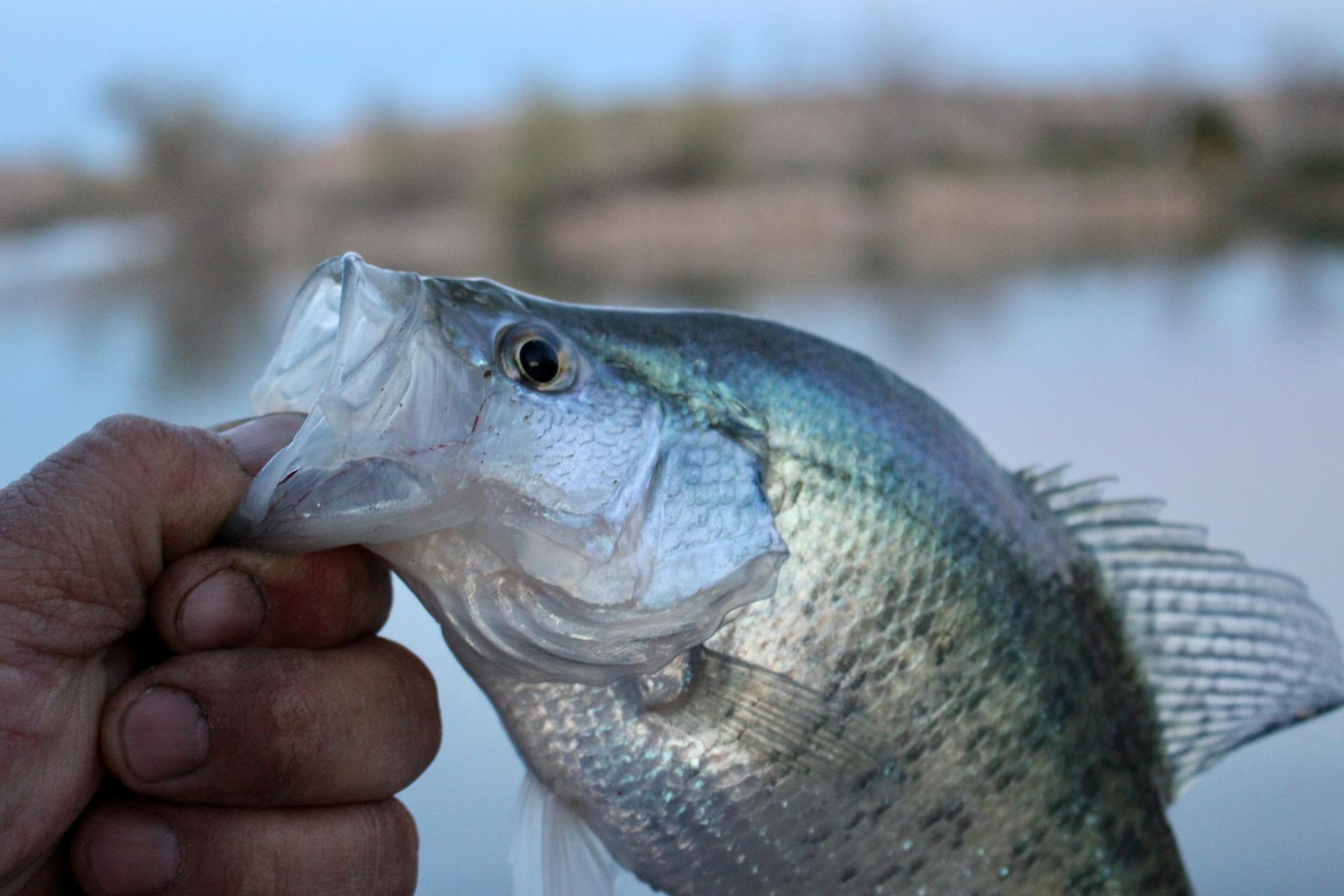
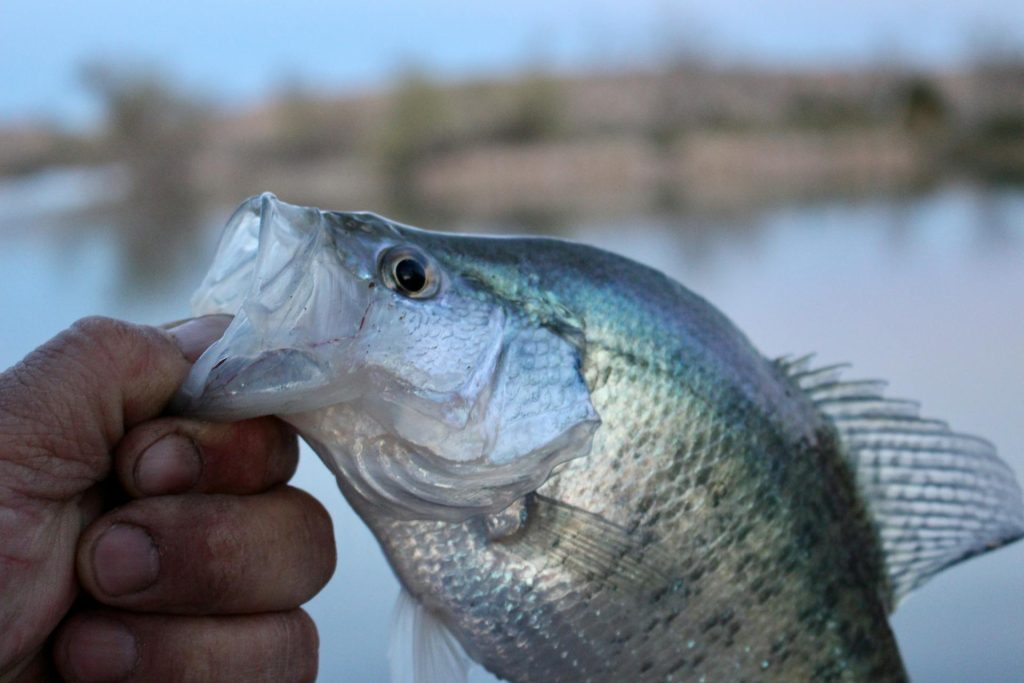
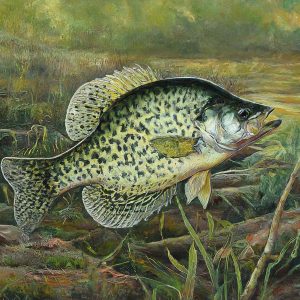
Crappie (pronounced KROP-ee) are a species of freshwater panfish found in lakes, reservoirs, rivers, ponds, and oxbow systems across the entire United States. There are two species: the black crappie (darker, more spotted pattern, prefers clearer water) and the white crappie (paler, more vertically banded, more tolerant of stained or murky water). In practice, beginners don’t need to worry much about which species they’re targeting — both are caught using the same techniques, live in the same types of habitat, and behave similarly across seasons.
What makes crappie so ideal for beginners and families comes down to four qualities that almost no other fish species shares:
- School is in session. Crappie almost always travel and hold in groups. Find one and you’ve likely found 10-50 more in the same area. This means once you dial in the right depth and location, you can have extended action rather than searching for scattered fish.
- They’re structure-oriented. Crappie almost never suspend in open water far from cover. They use brush piles, submerged timber, dock pilings, bridge supports, weed edges, and any other structure as home base. This makes them predictable and findable — if you see a dock, you know to fish it.
- Able and willing to bite. Crappie aren’t selective in the way that bass and trout can be. A small jig, a tiny soft plastic, or a live minnow under a bobber will catch crappie across virtually every season and water type. You don’t need a tackle box full of specialty lures.
- T-A-S-T-Y. Crappie are considered by many anglers to be the best-tasting freshwater fish in North America — clean white fillets that fry beautifully. Catching and keeping crappie within legal limits gives families a genuine, practical payoff for the fishing trip.
Quick Crappie Facts Every Beginner Should Know
Average size: 6–12 inches, 1–2 lbs. Trophy crappie exceed 14 inches and 2+ lbs.
Legal minimum: Typically 9–10 inches in most states (check your local regulations).
Bag limits: Usually 15–30 fish per angler per day depending on state and body of water.
World record: White crappie — 5 lbs 3 oz. Black crappie — 5 lbs 7 oz.
Lifespan: 7–10 years in healthy populations.
Diet: Primarily small minnows and shad, supplemented by aquatic insects, small crustaceans.
Best eating size: 9–11 inches — large enough to fillet easily, still tender.
Understanding How Crappie Use Structure
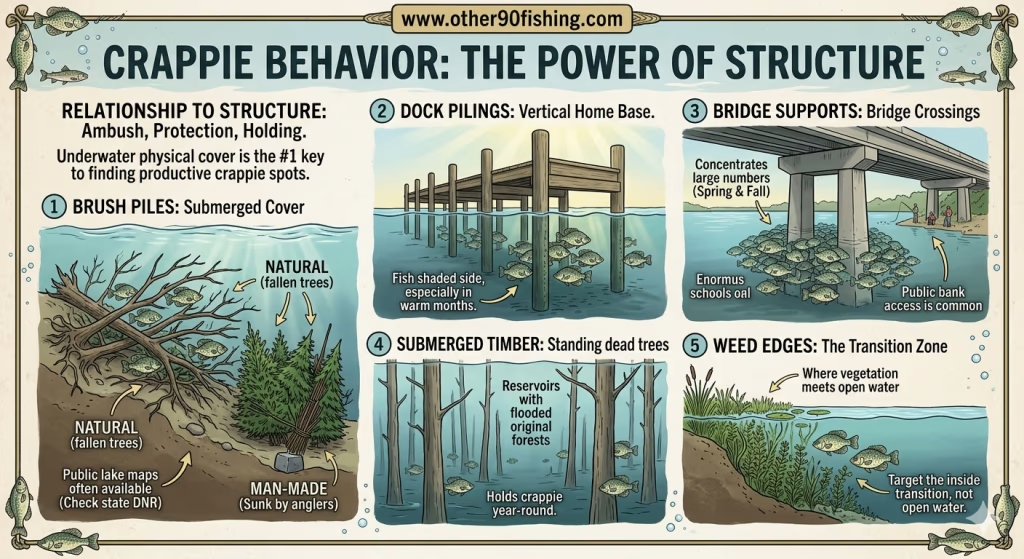
The single most important thing to understand about crappie behavior is their relationship to structure. Every productive crappie spot has one thing in common: physical cover that breaks up the water column and gives crappie a place to hold, ambush prey, and feel protected from larger predators.
The types of structure crappie use most:
- Brush piles: Either natural (submerged fallen trees and root systems) or man-made (piles of cedar trees or Christmas trees sunk by anglers or wildlife agencies). Brush piles are the #1 crappie attractor across all U.S. regions. Many public lakes have mapped brush pile locations — check with your state’s DNR.
- Dock pilings: Any dock creates a vertical structure that crappie use as a home base. Fish the shaded side of docks, especially in warm months.
- Bridge supports: Bridges over lake arms and river channels concentrate enormous numbers of crappie, particularly in spring and fall. Many bridge supports have public bank access.
- Submerged timber: Standing dead trees in reservoirs (especially older impoundments where the original forest was flooded) hold crappie year-round.
- Weed edges: Where aquatic vegetation meets open water, crappie hold on the inside edge of the weeds. Target the transition zone, not the open water.
Where to Find Crappie — By Season and Water Type
Crappie location changes with the seasons. Understanding this seasonal movement is the key to finding fish consistently throughout the year — in lakes, reservoirs, rivers, and ponds across the United States.
Spring (March – May)
The Best Season – Spawning brings fish shallow
What’s happening: Spring is the most productive crappie season of the year. As water temperatures climb from 55°F to 68°F, crappie move from their deep winter holding areas into the shallows to spawn. They gather in large numbers near brush, timber, and dock pilings in 3-8 feet of water — often in the same spots year after year.
Where to look: Shallow coves with brush or timber, protected bays, dock pilings in 4-6 feet of water, near flooded bushes and vegetation. Northface-of-cove locations are productive early spring; south and west-facing banks warm first.
Depth: 3-8 feet. Crappie will actually be visible in some clear systems — look for them hovering over spawning substrate.
Why it’s best for beginners: Fish are shallow, concentrated, and actively biting. A simple bobber and jig at 3-5 feet near any visible structure is nearly guaranteed to produce.
Timing: Morning hours are productive, but midday can be excellent too. Spring crappie often bite all day when temperatures are comfortable.
Summer (June-August)
Depth Shift – Fish move deeper to stay cool
What’s happening: After the spawn, crappie move to deeper, cooler water as summer heat warms the shallows. They typically suspend at 8-20 feet near deep brush piles, standing timber, creek channel edges, and bridge supports.
Where to look: Deep brush piles and timber near drop-offs, bridge pilings at 10-18 feet, creek channel bends, the shaded and cooler side of docks in deeper water.
Depth: 8-20 feet depending on the lake. In shallower ponds, crappie move to the deepest available water — sometimes only 6-8 feet.
Why timing matters: Early morning (first 2 hours of daylight) brings crappie shallower to feed. Midday heat pushes them deep. Evening is a second productive window.
Beginner adjustment: Use a slip bobber set at 10-15 feet, or count your jig down to depth before starting the retrieve. Vertical jigging straight down from a boat or dock is often the most productive summer technique.
Fall (September – November)
Shallows Again – Fall Feeding Frenzy
What’s happening: As water cools in fall, crappie move back toward the shallows to feed aggressively before winter. This is the second-best season for beginners. Fish are concentrated, hungry, and often in accessible locations.
Where to look: Shallow to mid-depth (5-12 feet) brush piles, dock areas, weed edges, and cove entrances. Crappie often chase shad schools into open areas in fall — look for surface activity.
Depth: 5-12 feet, shallowing as temperatures drop through October and November.
Timing: All-day action is common in fall, with morning and evening still being the peak windows.
Winter (December – February)
Slow but Possible – Deep & Slow is key
What’s happening: Cold water slows crappie metabolism dramatically. They group in tight schools on deep structure and barely move. But they do bite — and a well-placed vertical presentation can produce excellent catches even in near-freezing water.
Where to look: The deepest available structure: deep brush piles (15-25 feet), creek channel edges, standing timber at depth. Crappie schools in winter can be extremely dense — find one fish and you’ve found dozens.
Depth: 15-25 feet in larger lakes. Shallower in small ponds (sometimes only 6-10 feet).
Technique adjustment: Fish extremely slowly. Barely move the jig. Use the smallest jig head (1/16 oz or less). Most winter crappie bites are barely perceptible — the line goes slightly heavy or moves sideways.
Beginner note: Winter crappie fishing is challenging but rewarding in the cold months when few other fish are cooperative. Not recommended as a first outing, but worth learning once you’re comfortable in other seasons.
Reading the Water: Finding Crappie Spots at Any Body of Water
When you arrive at a new lake, reservoir, or pond for the first time, here’s how to identify productive crappie locations in under 5 minutes:
- Look for docks. Almost every dock on a lake holds crappie. Start there.
- Look for bridge crossings over coves or river arms. Bridge pilings are prime crappie habitat.
- Check for visible brush or timber entering the water from the bank.
- In spring, focus on shallow protected coves. In summer and winter, look for deeper water access (drop-offs visible on the bank, creek channels).
- Ask at the local bait shop. Crappie spots aren’t always closely guarded secrets — many locals are happy to point beginners toward community brush piles and known docks.
Simple Crappie Rigs and Techniques That Actually Work
One of the best things about crappie fishing is that the techniques are simple enough for a 7-year-old to master in 20 minutes. Here are the three approaches that consistently produce crappie for beginners across all seasons.
Jig Under a Bobber
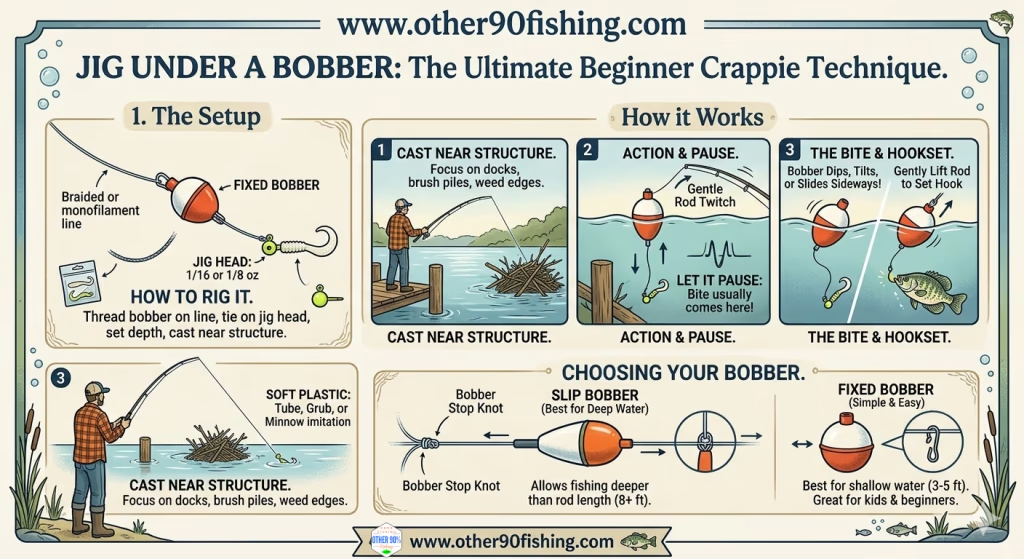
This is the most beginner-friendly crappie technique and one of the most productive presentations in the sport. Thread a slip bobber or clip-on bobber on your line, tie on a 1/16 or 1/8 oz jig head with a small soft plastic body (tube, grub, or minnow imitation), set the depth to where crappie are holding, and cast near visible structure. The bobber keeps your jig at a precise depth and tells you immediately when a crappie picks it up.
How it works: Cast near a dock piling, brush pile, or weed edge. Let the jig hang motionless for 5-10 seconds. Gently twitch the rod tip to give the jig small, subtle movements. Pause again. The bite usually comes on the pause or just after a twitch — the bobber will dip, tilt, or slide sideways. When it does, gently lift the rod to set the hook.
Slip bobber vs. fixed bobber: A slip bobber (also called a float) lets the line slide freely through a small hole in the center, allowing you to fish at precise depths greater than your rod length. For crappie at 8+ feet, a slip bobber is essential. For fishing in 3-5 feet of water, a simple clip-on fixed bobber works perfectly and is easier for kids to set up.
Kid note: This is the ideal first crappie setup for children. The bobber gives them something visual to watch, the jig makes natural movement without any technique required, and crappie are quick biters that keep kids engaged. Set the depth once, let the child cast to a dock or brush pile, and wait. Crappie will do the rest.
Vertical Jigging
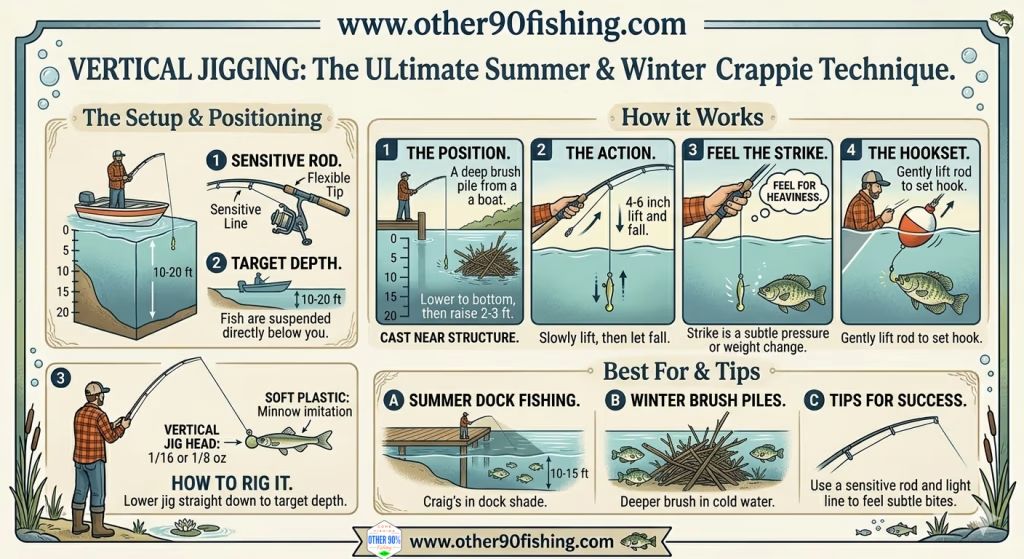
Vertical jigging is the most effective summer and winter crappie technique — it allows you to fish specific depths directly below you, which is critical when crappie are suspended at 10-20 feet. From a dock, bridge, or boat, lower your jig straight down to the target depth and use subtle rod-tip lifts and falls to work the jig. This is more technique-dependent than the bobber method but quickly becomes intuitive.
How it works: Lower the jig to the bottom, then raise it 2-3 feet off bottom. Slowly lift the rod tip 4-6 inches, then let it fall back. Repeat. Feel for the slight heaviness or pressure that signals a crappie has picked up the jig. The ‘strike’ is often so subtle that beginners miss it — if anything feels different, gently lift the rod.
Best for: Summer dock fishing, winter crappie in deep brush piles, anytime crappie are suspended at a specific depth and you can position yourself directly above them.
Live Minnows Under a Bobber
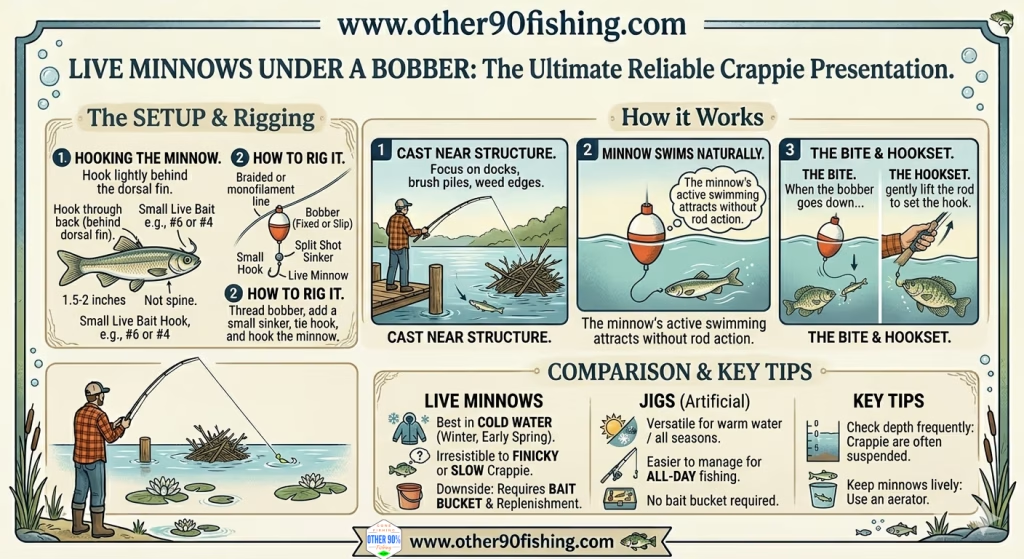
Live minnows are an extremely reliable crappie producer across all seasons and all regions. A 1.5-2 inch live minnow hooked through the back just behind the dorsal fin, fished under a bobber at the right depth, is often the single most effective presentation available — especially when crappie are being finicky about artificial lures.
How it works: Hook a small minnow lightly through the back (not the spine). Set a bobber at your target depth. Cast near structure and let the minnow swim naturally. The minnow’s movement will attract crappie without any action on your part. When the bobber goes down, set the hook with a gentle upward lift.
When to use live bait vs. jigs: Live minnows shine in cold water (winter and early spring) when crappie are slow and won’t always chase a jig. They’re also invaluable when you’re not getting bites on artificial lures — switching to live bait is a quick solution. The downside: live bait requires a bait bucket and regular replenishment. Jigs are easier to manage for all-day fishing.
The Most Common Crappie Beginner Mistake
Fishing too fast and moving on too quickly. Crappie are not always aggressive, and the strike can be very subtle — especially in cold water or heavy cover.
The fix: After each cast, leave your presentation in place for at least 30-60 seconds before moving. Give a slow twitch, then a pause. Another twitch, another pause. The bite almost always comes during the pause.
Second mistake: Fishing the wrong depth. Crappie are almost always at a specific depth layer, and being 2 feet above or below them produces nothing. If you’re not getting bites, adjust your depth by 2-foot increments until you find the productive layer.
Third mistake: Setting the hook too hard. Crappie have soft, papery mouths. A violent hook set will rip the hook right through. Use a gentle upward lift — the weight of the rod is usually enough to set a small crappie hook.
The Right Gear for Crappie Fishing — Without Overcomplicating It
Crappie gear is genuinely simple and inexpensive. A complete crappie setup — rod, reel, line, and a selection of jigs — can be assembled for $30-$60 and will catch fish as effectively as gear costing 10 times more. Here’s what you actually need.
Rod and Reel: The Ultralight Spinning Setup
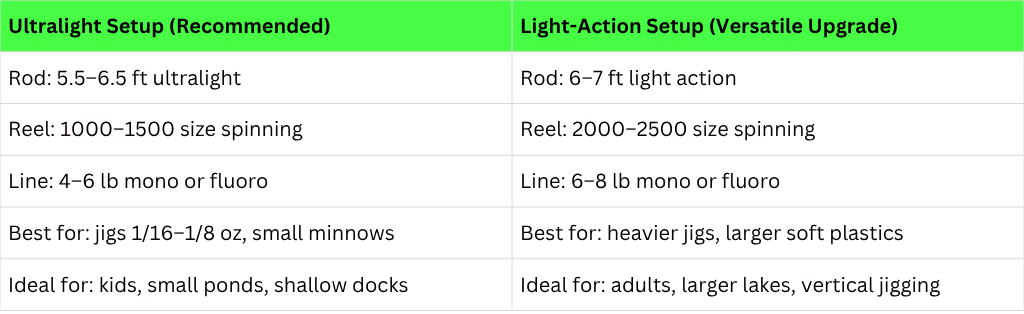
Crappie fishing is light-line, light-lure fishing — and that means ultralight to light spinning tackle is the right choice. A 5.5- to 7-foot ultralight or light-action spinning rod paired with a 1000-2000 size spinning reel is the standard crappie setup. The light action rod gives you the sensitivity to detect subtle crappie bites that would be invisible on heavier bass tackle, and the flexibility to enjoy the fight from a fish that rarely exceeds 2 pounds.
For kids, a 4.5-5.5 foot ultralight rod is easier to manage — shorter rods are lighter, require less strength, and allow young anglers to fish with more control. Many stores sell pre-packaged ultralight combos in the $20-$40 range that are perfectly functional for crappie fishing and make good starter setups for children.
Line: 4-6 Pound Is the Sweet Spot
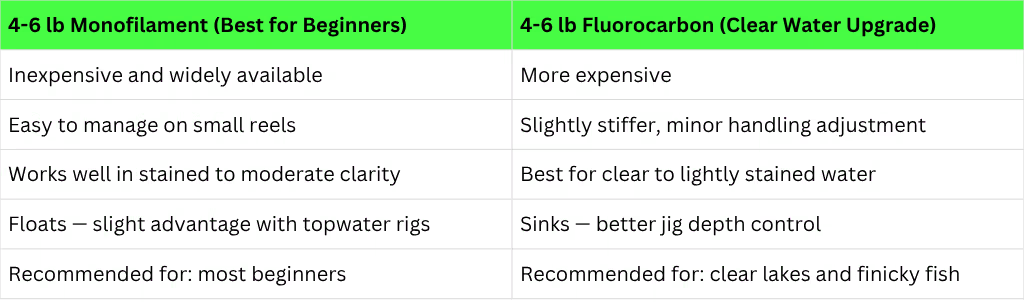
Crappie fishing requires light line for two reasons: the lures are light (1/16 to 1/8 oz jigs don’t cast well on heavy line) and crappie can be line-shy in clear water. Four to six pound monofilament is the most common and most practical choice for beginners — it’s inexpensive, easy to manage, and provides enough strength for any crappie you’ll encounter. Six to eight pound is acceptable for murky-water fishing or when using live minnows in heavier cover.
Fluorocarbon in 4-6 lb is worth the upgrade in clear-water situations (clear highland reservoirs, clear natural lakes) because its near-invisibility significantly improves strike rates when crappie are line-shy. The trade-off: it’s stiffer than mono and slightly harder to manage on very small spinning reels. For most beginners fishing average-visibility water, 4-6 lb monofilament is the right starting point.
Jigs: The Essential Crappie Lure
A crappie jig is simply a small hook with a lead head and a soft plastic body attached. They come in sizes from 1/32 oz to 1/4 oz — for crappie fishing, 1/16 oz and 1/8 oz cover virtually all situations. The 1/16 oz jig is the gold standard: light enough to fall slowly and naturally (which triggers more bites), easy to fish under a bobber or vertically, and available in every sporting goods store in the country.
Soft plastic bodies — tubes vs. grubs: Tube-style soft plastics have hollow bodies with tentacle-like tails that create a unique pulsing action — excellent in clear water and when crappie are keyed on small baitfish. Grub-style bodies have single curly tails that produce a swimming action — effective in stained water and when a more visible profile is needed. Both work consistently; beginners should carry both and experiment.
Color guide: In clear water: white, chartreuse/white, pink, and natural shad patterns. In stained water: brighter colors — chartreuse, orange, yellow, and red. Under overcast skies: dark colors like black/chartreuse or purple are surprisingly effective. Many experienced crappie anglers say that jig color matters less than jig size and presentation — when in doubt, chartreuse produces everywhere.
The Beginner Crappie Tackle Box: What You Actually Need
Crappie Starter Tackle Box
☐ Ultralight spinning combo (rod + reel) — spooled with 4-6 lb monofilament
☐ 1/16 oz jig heads (10-pack) — assorted colors
☐ 1/8 oz jig heads (10-pack) — for deeper or windier conditions
☐ Tube-style soft plastics — white, chartreuse, and a dark color (2-inch size)
☐ Grub-style soft plastics — chartreuse and shad color (2-inch size)
☐ Slip bobbers (3-4) — for variable depth control
☐ Fixed clip-on bobbers (3-4) — for kids and shallow water
☐ Small split-shot sinkers (assorted pack)
☐ Small barrel swivels (for attaching leaders)
☐ Size 2-4 Aberdeen hooks (for live minnow rigs)
☐ Needle-nose pliers (for hook removal)
☐ Line cutter or small scissors
☐ Small tackle box or soft-sided bag to hold everything
Your First Crappie Fishing Trip: A Step-by-Step Guide
You now have the knowledge. Here’s how to convert it into a successful first trip — whether you’re going alone, with a partner, or taking kids fishing for the first time.
Step by Step
Your first crappie outing
BEFORE YOU GO:
• Check your state’s fishing regulations. Get a fishing license if required (most states: age 16+). Check size limits and bag limits for crappie on your specific body of water.
• Identify a nearby body of water with public access. State DNR websites list public fishing access points. Parks and recreation areas often have fishing piers near docks and brush.
• Pick your season and adjust your depth expectation: Spring/Fall = 3-10 feet near structure; Summer = 8-20 feet near deeper structure; Winter = deepest available structure.
• Rig your rod the night before: tie a 1/16 oz jig directly to your line using an improved clinch knot (or attach it with a small snap swivel). Set a slip bobber if fishing 6+ feet.
AT THE WATER:
• Find a dock, bridge piling, or any visible brush pile near the water. These are your starting locations.
• Set bobber depth to match your target zone. In spring near docks: 3-5 feet. In summer: 8-12 feet.
• Cast just past the structure and let the jig swing in under the dock or brush pile. Don’t splash it right on top of the fish.
• Watch the bobber. Twitch the rod tip gently every 15-20 seconds. Let it hang still the rest of the time.
• When the bobber dips, tilts, or moves sideways — gently lift the rod. Don’t jerk. The hook is small and will seat easily.
• If no bites in 5 minutes, adjust the bobber depth 2 feet deeper and try again. If still nothing, move to the next dock or structure.
WHEN YOU FIND THEM:
• Note the exact depth. Cast the same depth at every similar structure on that lake — crappie school at consistent depth layers.
• Keep the area calm. Avoid splashing, loud conversation near the water, and heavy footsteps on dock boards.
• Wet your hands before handling fish. Crappie are easy to hold (no spines to worry about on the dorsal fin once folded down) and ideal for kids to learn fish-handling basics.
One more tip that experienced crappie anglers swear by: if you catch a crappie from a specific dock piling or brush pile, stay there. Drop your jig straight down in the same spot. Cast to the same location again. Crappie schools don’t scatter after a catch the way individual bass might — the rest of the school is still right there. This is one of the things that makes crappie fishing so satisfying for beginners: once you’ve located a school, you can catch fish consistently from the same spot for an extended period.
Crappie Fishing Is One of the Best Decisions a New Angler Can Make
If you take one thing from this guide, let it be this: crappie fishing is forgiving, productive, and genuinely fun for anglers of all ages and skill levels. The equipment is simple and inexpensive. The techniques are straightforward enough for kids to master quickly. The fish are available year-round across the entire United States. And when the bite is on in spring or fall, catching 20-30 fish in a morning outing is completely realistic for a beginner with a $40 setup and the knowledge you’ve just built.
Go find a dock. Tie on a 1/16 oz chartreuse jig. Set your bobber at 4 feet. You’re ready.